
Commentary
Men Die. Principles Live.
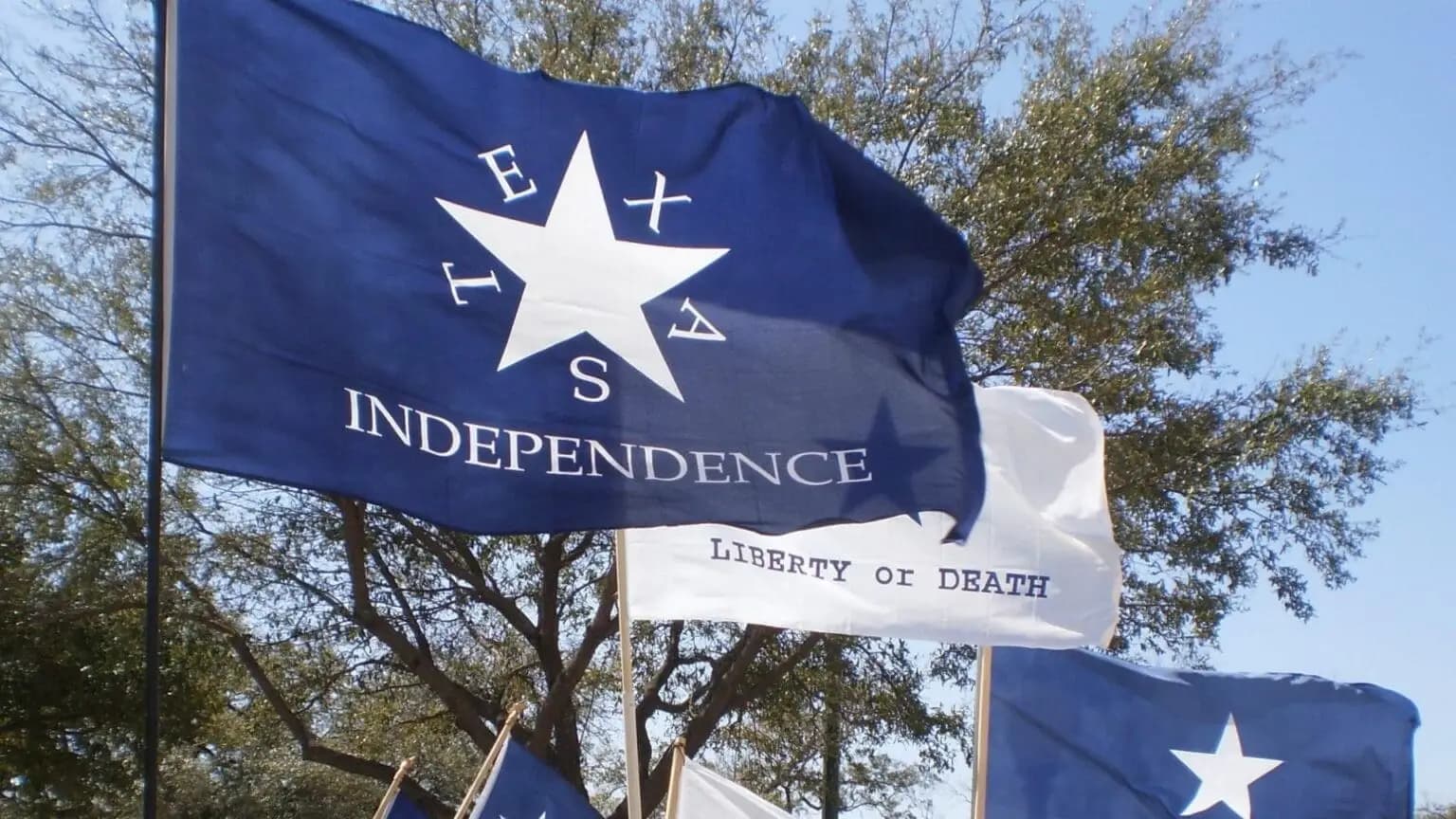
I have spent a good part of this year making an argument I now want to finish, because I have come to see that I was only ever making half of it. The argument is that the founders were on our side. I made it this spring at the Abbeville Institute, before a room of people who study the Declaration for a living, and I have made it on smaller stages a dozen times since. It is a good argument, and I believe it. The men who put their names to the Declaration were declaring independence, not begging for reform. The Texians who raised a republic in 1836 built their own declaration on the frame Jefferson had cut sixty years earlier. The lineage is real, and on the two hundred and fiftieth anniversary of the first of those documents, it is tempting to spend the whole day tracing it.
I am going to argue that we cannot stop there. Not because the history is wrong, but because leaning on it alone has quietly cost us the one thing the history was meant to secure.
The courtroom of the dead
Watch what happens whenever we argue for Texas independence by proving that Jefferson would have approved. In the space of a single sentence we have moved the question out of Texas and into a courtroom where every judge has been dead for two hundred years. The matter before the court is no longer whether the people who live here should govern themselves. It is now what a Virginian meant in 1776, and whether the men of Philadelphia would recognize us as their heirs, and whose reading of a dead man’s paragraph is the more faithful. It is a genuinely interesting case. It is also one that never has to end.
That is its appeal to the people who do not want Texas to decide anything. An argument about the intentions of the dead can be adjourned forever. There is always another letter to parse, always another biographer to summon. You can win the history and be told the history is contested. You can lose the history and be told that nothing follows from it anyway, since the men in question are two centuries gone and cannot be called to clarify. A people can spend a hundred years in that courtroom and never once be asked the only question a free people is ever really asked, which is what it wants, now, for itself.
The argument I have been making, the good and true one about our founding lineage, walks us into that courtroom of our own accord and lets the door swing shut behind us.
What Jefferson feared
There is a document in the founders’ own hand that dismantles the whole habit of consulting the founders, and it is not one that gets read aloud at picnics. In September of 1789, with the ink barely dry on the new Constitution, Thomas Jefferson sat in Paris and wrote to James Madison to work through a question that had been troubling him. He called it a question that seemed never to have been raised on either side of the water, though it went to the foundation of every government on earth. Whether one generation of men has the right to bind the next.
Jefferson reasoned it out from a principle he took to be self-evident. The earth, he wrote, belongs in usufruct to the living. Usufruct is an old word from the law of property. It names the right to use a thing and take its fruits while you hold it, but not to own it, not to spend its substance, not to mortgage it against the people who come after. We hold the world the way a tenant holds a farm he means to pass on, not the way a man holds a coin he is free to melt. From that principle Jefferson drew a conclusion meant to stop the reader cold. The dead, he wrote, have neither powers nor rights over the earth. And if the dead have no rights in it, then no generation can bind the next to a debt, a constitution, or a law it never agreed to carry.
He did not leave it as mere sentiment. He reached for a mortality table and did the arithmetic. Taking the adults alive at any given moment as a single body, he worked out how long before half of them would be in the ground, and arrived at a figure near nineteen years. From that he wrote the hardest sentence in the letter. Every constitution, and every law, naturally expires at the end of nineteen years. If it is enforced longer, it is an act of force, and not of right.
Measure the size of that claim, because we have spent two and a half centuries pretending the most quoted founder in American life never made it. He was not saying a constitution may be amended. He was saying a constitution has a natural lifespan, that it dies with the generation that ratified it, and that holding a later generation to it is not law at all but force in the costume of law. The dead hand of the past, laid on the shoulder of the living, was to Jefferson a species of tyranny, and no less a tyranny for being the tyranny of admirable men.
Madison won
Madison wrote back, and he definitely did not agree. I would be doing exactly what I have accused our opponents of doing if I left him out.
He answered a few months later with the caution of a man who had just spent a summer building an institution meant to last. He granted the elegance of the principle and then went to work on its practice. A generation does not arrive all at once and depart all at once, he observed, but bleeds without a seam into the next, so there is no clean nineteen-year line to be drawn across a people. Debts and improvements descend together, and it is not obvious the heir should take the farm while disowning the mortgage that cleared it. A country that tore up its constitution every nineteen years by operation of law would live in permanent convulsion, hostage to whatever faction held the floor in the year of expiration. Better, Madison thought, to rest a government on the tacit assent of each generation to what it inherits, and to mend the inheritance by amendment rather than pull it down.
It was the wiser counsel for building a durable state, and it won. We did not adopt Jefferson’s expiring constitution. We adopted Madison’s enduring one, and we have kept it now longer than any people has ever kept such a document. That endurance is a real achievement, and I am not romantic enough to wish it away. A stable frame of government is a genuine good, and the men who argued for permanence were not fools or tyrants. They were careful builders, and most of what they built has held.
But every settlement carries a price its winners are slow to name. When a constitution is built to endure, the arrangement you were born under stops presenting itself to you as a choice. It presents itself as a settled fact, a fixed feature of the landscape, a thing that simply is. Jefferson wanted every generation handed the pen. Madison arranged for every generation to be handed a finished document and taught to revere it. We took Madison’s bargain, and for long stretches it has served us well. The reckoning comes only on the day a generation looks hard at the inheritance and asks, out loud, whether it still consents. On that day the entire weight of the enduring settlement falls on the question, and the question is treated not as the most natural thing in the world but as a kind of vandalism against the house.
Look closely at how we argue about that inherited document, because the argument gives the game away. One school of our law holds that the Constitution means what the men who framed it meant, and that the duty of the living is to find that fixed meaning and keep faith with it. Another holds that its meaning should breathe and shift with the age, as judges read the needs of the present moment into the text. I have a firm view of which of those is the more honest work, and I suspect you share it. But set that quarrel down for a moment and see what the two sides have in common. Both are fights over how to read a document the living were never once asked to ratify. The first says obey the meaning the dead fixed. The second says let a chamber of unelected judges keep revising the meaning the dead fixed, without ever returning the pen to the people, and that is the worse of the two by a wide margin, because it fits the living hand of a small elite inside the dead hand’s glove and calls the puppet self-government. Neither one reaches the question that sits beneath them both. Not what the old document means, but whether the people alive today consent to the order it created at all. No feat of interpretation can answer that. Only the living can, the way the founders did, by deciding in the open and saying so with a vote. The cure for the dead hand was never a cleverer judge on the bench. It was a living people at the ballot box.
The one perpetuity we protect
The law of property has always understood the thing our politics pretends to forget, and Texas wrote the understanding into its Bill of Rights. Article one, section twenty-six, a few clauses below free speech and trial by jury, declares that perpetuities and monopolies are contrary to the genius of a free government and shall never be allowed, and that the old laws of primogeniture and entail shall never have force in this state.
Read that clause with Jefferson’s letter in your hand, and it stops looking like a technicality. A perpetuity is a dead man’s grip on property that will not open, a disposition fixed by someone long gone that the living are forbidden to undo. The whole body of law we call the rule against perpetuities exists to pry that grip loose. It lets a man direct the use of his land for a while after his death, for a life in being and a childhood beyond it, and no further, because to let the dead command a thing forever is to let the dead govern the living, and a free people will not have it. Entail and primogeniture were the disease in its sharpest form, the machinery that chained an estate to a bloodline so that no living heir could divide it, or sell it, or choose otherwise. Texas named those two by hand and struck them down by constitutional command.
It is no accident that the man who wrote that the earth belongs to the living had already spent his strength breaking these very chains. Years before the letter to Madison, Thomas Jefferson led the fight to abolish entail and primogeniture in Virginia, and he counted it among the proudest work of his life, the pulling up, as he put it, of every fiber of aristocracy. The ban on perpetuities and the earth belonging to the living are one conviction in two rooms of the same house. One forbids the dead to rule a farm forever. The other forbids the dead to rule a people forever. Texas guards the first as a constitutional right and has somehow been persuaded to treat the second as sedition.
Set the two side by side and let the contradiction show itself. We will not permit a dead man to entail his own land upon his great-grandchildren. Why do we accept that a convention which finished its work in 1845, whose every member has lain in the grave for a century and a half, entailed the political allegiance of every Texan who has lived since and every Texan not yet born? We free the estate at a generation. We are told the union is fixed for all time. I will not pretend the perpetuities clause strikes down the terms of annexation, because it governs property and not sovereignty, and a lawyer who argued otherwise in a courtroom would lose and deserve to. The claim I am making is harder to wave off. The people of Texas wrote into the first article of their own constitution that a free government does not abide the dead hand, and were then taught to make the largest exception imaginable, and in all the years since, no one has given them an honest reason why the one perpetuity a free people must tolerate is the one that governs the people themselves.
Older than Rome
Jefferson reached for the Roman word usufruct and believed he was borrowing from the lawyers of the ancient republic. He was borrowing from something far older. The principle was handed down at Sinai, and any Texan who opens his Bible will know it on sight.
When God gave Abraham the land, He set a condition on it that should sound familiar by now. “The land shall not be sold for ever,” He said, “for the land is mine, for ye are strangers and sojourners with me.” That is usufruct, plainly, three thousand years before Jefferson gave it a Latin name. The land is the Lord’s. No generation owns it. Each holds it as a tenant and passes it on. “The earth is the Lord’s, and the fulness thereof,” sings the Psalmist, and David prays that we are strangers and sojourners before God, as all our fathers were, our days upon the earth as a shadow. Man passes through. He does not possess.
The Lord built the release directly into the law. Every seventh year, debts were forgiven, so that no man’s borrowing could bind his children. Every fiftieth year, the year of Jubilee, the land returned to the family that first held it, and the bound were set free, so that no debt and no bad bargain could harden into a permanent estate laid across the generations to come. It is no accident that the words we cast onto the Liberty Bell were taken from that very statute, proclaim liberty throughout all the land unto all the inhabitants thereof. The Jubilee is the dead hand pried open by the hand of God Himself, on a fixed schedule, forever. Jefferson’s nineteen years was a faint copy of a thing the Author of freedom had commanded outright.
But Scripture does not stop where Jefferson stopped, and where it goes next corrects him. It does bind the generations, and it binds them in the strongest bond there is. God covenants with His people down through the children and the children’s children, an everlasting covenant, made in His own name and kept by His own hand. Nothing in the world of men is that. No constitution, no treaty, no union of states is a holy and eternal covenant, and to dress a political bargain in those robes is profane, the taking of a sacred thing to prop up a mortal one. The Union is not that. The Texian inheritance is not that. What Scripture lends our argument is not its covenant but its pattern, and the pattern is plain.
Even that covenant, the eternal one, was never meant to be inherited in its sleep. God made each generation of Israel take it up and swear to it again as if it were new. “Choose you this day whom ye will serve,” Joshua tells the nation, a whole people standing in the open and consenting for itself. Moses reminds them that the covenant at Horeb was made not with their fathers alone, but with them, even them, who were all of them alive that day. Josiah renews it. Nehemiah renews it. If the living were called to ratify even the covenant that came down from God, in their own voice and their own time, then the claim that a bargain struck by men in 1845 binds their descendants forever, unasked and unrenewed, is not reverence for the past. It is superstition, and a superstition convenient for whoever holds the power the bargain handed over.
So keep the two apart, and the argument stands clear. We honor what our fathers built. The Texian republic, the men of 1836, the long inheritance that made us a people apart, are not a weight to be shrugged off. They are a trust handed down, and we mean to keep faith with it. But a trust is kept by the living who hold it, and an inheritance no heir ever takes up is not an inheritance at all, only a rumor of one. “Honor thy father” is a commandment. So is “choose you this day.” They were never enemies. A free people, like a faithful one, receives what it was given and then, in its own voice and its own hour, says yes.
The fiction we agreed not to examine
Consent of the governed is the phrase everyone reveres, and no one inspects. It sits in the second sentence of the Declaration like a cornerstone, and we have leaned on it so long that we have stopped asking whether it still carries any load.
No one now alive ever consented to be governed by the United States. You did not sign anything. Neither did I. We were each born inside an arrangement that was already two centuries old, and our supposed consent to it has to be manufactured out of something other than an act of consenting, because no such act was ever performed. The philosophers who built the theory saw the hole and tried to fill it. John Locke, whose fingerprints are all over the Declaration, held that a man gives his tacit consent to a government merely by living under it and enjoying its roads and its protection. Travel freely on the king’s highway, Locke said, and you have consented to the king.
David Hume took that argument apart, and it has never really been put back together. Tacit consent is no consent at all, Hume answered, when the only alternative to staying is ruin. He drew the picture that has clung to the theory ever since. Imagine a man carried aboard a ship in his sleep and waking far out at sea. Tell that man he has freely agreed to obey the captain because he does not fling himself over the side and drown, and you have said something absurd. The poor man who speaks no foreign tongue and lives from one day’s wages to the next has not consented to his government by declining to emigrate. He has only found the ocean unsurvivable. Staying is not choosing when leaving is death.
That is the rotten board beneath the whole American floor, and we have thrown a rug over it and held our celebrations on top. Consent of the governed, in daily practice, has quietly decayed into the absence of open revolt. So long as a people does not rise, we treat it as having agreed. But the absence of a rebellion is not the presence of consent. A people can go a very long time neither consenting nor revolting, only enduring, because the machinery for putting it the question has been allowed to rust, and because it has been taught that raising the question at all is the mark of an ingrate.
Making consent real
Everything to this point describes a problem. The repair is smaller and more ordinary than the problem, and it has been sitting in front of us the whole time.
A vote on Texas independence is not a departure from the Declaration’s principle. It is the repair of it. It is the one instrument that takes the fiction of tacit consent and turns it back into the actual article, a real question, put to real people, answered in the open and counted. When a Texan is handed a ballot and asked whether he consents to the government he lives under, Hume’s ship finally makes port. The man is awake. He can see the shore. He is being asked, for the first time in his own life and in the lives of everyone he descends from, to say yes or no and to have the answer carry weight. That is not the abolition of the consent of the governed. That is the consent of the governed made real, perhaps for the first time in the life of anyone now living.
We have spoken so far of the Constitution, the way Jefferson did, but the word carries more than it should, and the whole Texas argument turns on being exact. It is not the Constitution, strictly speaking, that binds Texas. A constitution is an instrument, a set of words on a page, and men may argue over its meaning without end. What binds Texas is the Union, and the Union is a compact. It was not decreed. It was made, brought into being by the assent of the several States, each acting for itself, each a party to the bargain and not a subject of it. And the assent that made it was not the tacit kind Hume took apart, the bare fact of living somewhere and not fleeing. It was express, and in Texas it was as express as consent has ever been. Texas did not drift into the Union, or get carried in while it slept. Its delegates met in convention, and then the whole question was carried to the people themselves. In October of 1845 the men of the Republic went to the polls and voted, in a plain referendum, to accept annexation and the constitution that came with it. A sovereign nation chose, by the direct vote of its own people, to enter the compact, and it entered without surrendering the sovereignty that made it a nation. Like every State that signed before it, Texas delegated a set of named powers to the common government and kept everything it had not delegated, its reserved authority and its own character as a nation. It was the twenty-eighth signature on an agreement the others had already signed. The “American nationalist” will answer that the Union is older and higher than the States, that we the people meant one consolidated nation from the start. But a thing ratified state by separate state, in one convention after another, is a thing the States were party to, and the party to a compact keeps a standing that a subject never holds. Texas is a party, and the living people of Texas are that party’s voice. They voted their way into the Union, and what a people enters by its own vote, only that people can revisit by the same. An assent given once, at the ballot box, long ago, and never renewed since, is a thing the living may be asked to give again, or at last to withhold.
And no living Texan has ever been asked to. The generation that debated annexation and ratified it is a hundred and fifty years in the grave. Every soul who cast a vote on that question is gone, and not one of their descendants has been given a vote of his own. The arrangement simply descended, like a piece of furniture nobody remembers buying, and we are told that living in the house is the same as having chosen it. Hume answered that argument nearly two hundred and eighty years ago, and the answer has not improved with age.
Notice what this does to the old arguments, ours among them. When we point back to the Republic, we are not filing a claim or asking an ancestor for leave. We are remembering who we are. The decade Texas governed itself, the men who signed at Washington-on-the-Brazos, the whole Texian inheritance, are not a case we plead. They are a birthright we carry. But a birthright is one thing, and its exercise is another, and this is the place where we have let the argument go slack. Our fathers can hand down the standing to decide. They cannot do the deciding for us, any more than a father’s faith can be believed on his son’s behalf. The inheritance is real, and it is ours, and it still waits on this generation to claim it in its own voice. That is all a vote is. It is the living rising to their feet inside the compact they were handed and answering, at last, for themselves. No arrangement, however old and however revered, holds just power over a people that has never once been asked whether it consents.
What actually carried through
Something real did carry through from that summer in Philadelphia, and it is the most important inheritance a free people can hold. It was never the men. It was the act, and the act came with an instruction the founders could not have made plainer.
The Declaration was not written as a monument to be guarded behind glass. It was written as an example to be used. Its entire argument is that a people bound to a government it no longer consents to may stand up, say so, and answer for the saying. That is not an heirloom. It is a template, and the proof that it carried through is not that we recite it once a year. The proof is that the world has spent two and a half centuries doing it again.
Count the declarations of independence written since. There are more than a hundred of them, and a great many open in the cadence of the one signed in Philadelphia, because a people reaching for its own freedom keeps discovering that the Americans already cut the pattern. Jefferson’s words have been translated, borrowed, and flung back at empires on nearly every continent, by peoples who had never laid eyes on Philadelphia and owed its founders nothing but the example of what they had done. When Texas declared its own independence in 1836, it did the same, laying out its case against Santa Anna in the very frame Jefferson had built, because the men at Washington-on-the-Brazos knew a working tool when they held one. None of this was veneration. Not one of these peoples asked the founders for permission. They honored the founders in the only way the founders would have recognized, by doing what the founders had done.
That is the carry-through, and it is the opposite of the courtroom of the dead. The Declaration does not reach across the centuries to bind us. It reaches across the centuries to free us, and it frees us by showing that the thing can be done, that a people may govern itself, that the question of consent is never closed, and never anyone’s to answer but the living’s. A generation keeps faith with 1776 not by sealing its words under glass but by finding, in its own hour and its own trouble, the nerve to say them again in its own voice. What was handed down was never a set of answers. It was the permission to ask the question, and the example of men who asked it and lived free.
The counterfeit of honor
There is a way of honoring the fathers that is really its opposite, and everything turns on telling the two apart. To honor them is commanded, and I mean to keep the commandment. But honor curdles into its counterfeit the moment it becomes a reason not to act, the moment a people persuades itself that the way to revere the men who governed themselves is to decline, in perpetuity, to govern itself. That is not honor. It is reverence spent as an excuse, and the two hundred and fiftieth anniversary is when the counterfeit is struck in bulk. The day will be kept, in ten thousand places, as an occasion for looking backward, for reciting the words of the departed and disputing which side is their truer heir. And the one thing almost no one will do, on the anniversary of the boldest act of self-government the world has produced, is govern themselves.
The men in Philadelphia would find this strange, and by their own rule it does not finally matter whether they would, which is the whole of the point. They did not consult a canon. They did not spend the summer of 1776 proving that some older authority would have approved of what they were about to do. They looked at the arrangement they had been born into, judged that they no longer consented to it, and said so, over their own names, at the hazard of their own necks. That was the act. Not the citation of a principle but the exercise of one. They had no ballot with which to do it. A king had left them nothing but their own signatures and the rope that waited if they lost. We have been handed the instrument they never had, and we can do lawfully, with a vote counted in the open, the very thing they could attempt only at the risk of their lives. There is no honor, and no wisdom, in leaving it unused. Everything we rightly admire in them is contained in the fact that they asked no dead man’s leave. To honor them by asking for their leave is to miss entirely what they did.
The living
So do not spend this day in the courtroom of the dead. Do not spend it proving that Texas has an ancestor. Spend it on the only question that was ever yours to answer, which is whether you, alive, in the year you are actually living in, consent to the way you are governed. That is not a radical question. It is the founding question, the one beneath all the others, the one the whole document was written to make it possible for a people to ask. And a government that treats the asking of it as a threat has already told you how little it trusts its own answer.
More than 600,000 Texans across all 254 counties have begun to answer it. They are not waiting on a permission slip from 1776. They are doing the thing the men of 1776 actually did, which is to speak for themselves, in their own time, and be counted. If you have read this far, read the rest of the case, and then set your name beside theirs. You will find it here.
The earth belongs to the living. Jefferson was right about that, and right that almost no one would care to hear it, because it refuses to let us hide behind the past and lays the weight and accountability back on us, where it belongs. The dead cannot govern Texas. They cannot cast a ballot, or carry a tax, or raise a child inside the arrangement they left behind. Only the living can do those things, and a people that can do them can also decide whether the arrangement is still worth keeping. That question has waited two hundred and fifty years for an honest answer. We are the first generation in a long while with the means to give one.
Men die. Principles live. Whether this one lives on is not for the dead to settle. It never was.
Originally published in Texian Partisan.
More Like This
Commentary
The Ship of Theseus
The man who wants the Constitution enforced is asking for the ship to be repaired. Nearly every plank in it has already been drawn out and replaced, most of them without anybody being asked, and Texas can still produce the receipts on its own timber.
Daniel Miller · September 21, 2026
Commentary
I Crossed the Line at Twenty-Two
Thirty years ago today, I pressed my thumb into red ink in a Tyler hotel hallway and joined the fight for Texas independence. What that decision built, and why the vote was always ours to hold.
Daniel Miller · August 24, 2026
Commentary
Nothing New Under the Sun
The Cruz rumor, Salmon Chase, and the case Texans are told settles everything
Daniel Miller · August 15, 2026
Stay in the loop
Join the newsletter for new writing, media, and event news. Subscribe and get a free chapter of TEXIT.