
Commentary
What Did You Do Besides Vote?
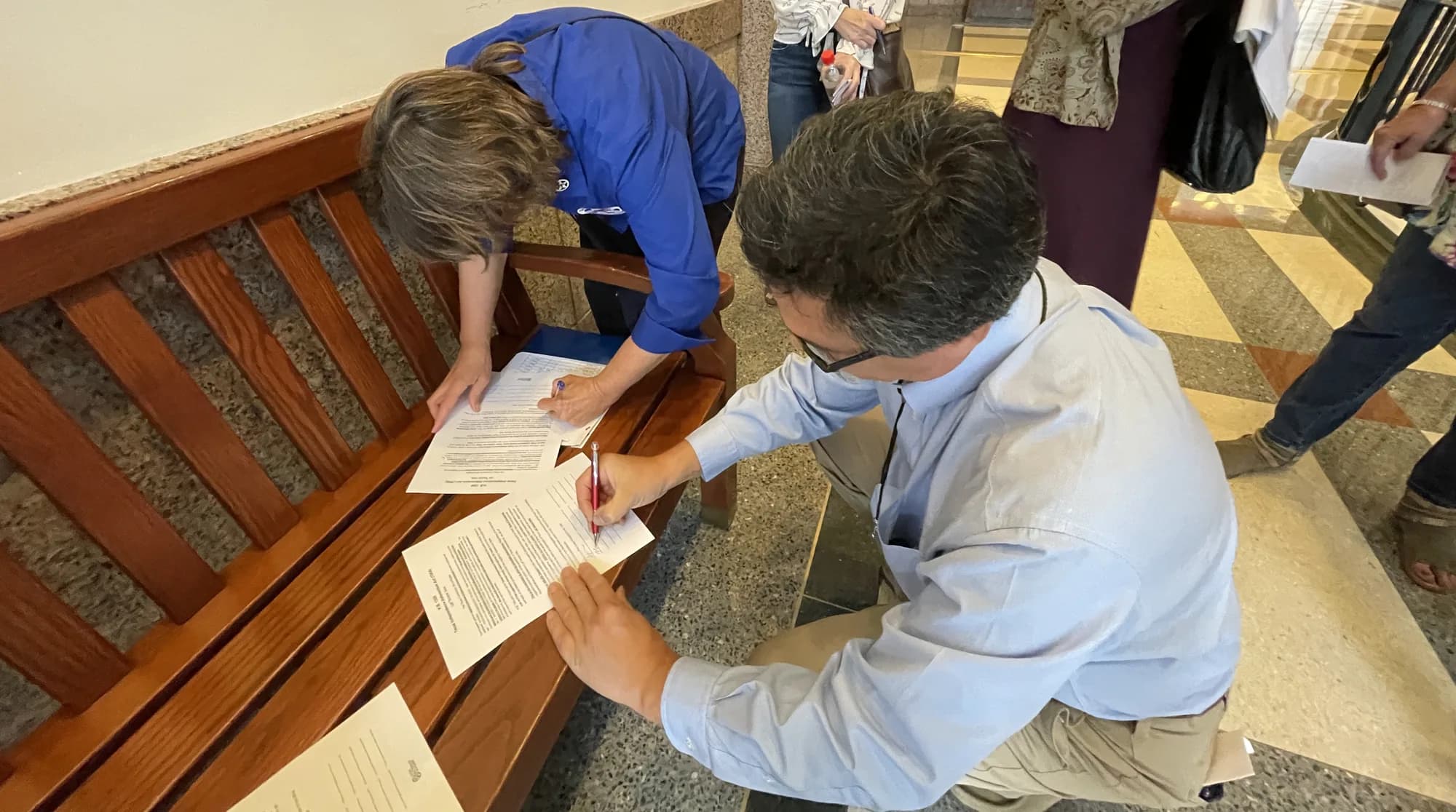
I have said it so many times that I'm sick of hearing myself say it. The next election starts the morning after the last one ends. It was true when I started this work in August of 1996, and it is still true two weeks after the general election of November 3, 2026.
I'm going to say it again anyway, because this week I keep hearing from Texans who are furious about the results. Some of them can't stand the thought of who will control the Texas House in January, while others are upset about a statewide race, or about a race in their own district that came down to a few hundred votes, or about all of the above. They are Republicans, Democrats and independents, and nearly every one of them is judging the election by its output.
I want to judge it by its inputs. Theirs, and perhaps yours.
There are plenty of people right now who will tell a disappointed voter that the other side cheated or that the voters were fooled. I'm not one of them. Elections in Texas are decided by the people who show up, and who shows up is decided by the people who did the work months and years before anyone cast a ballot. Therefore an audit of November 3 can't start on November 3. It starts nearly two years earlier and runs through every step of the cycle, in order.
The People Who Didn't Come
Start with the number almost nobody posts about. According to the Secretary of State, 19,041,684 Texans were registered to vote in this election, and on the unofficial count the two major-party candidates for governor received about 9.76 million votes between them, which means that close to half of the registered voters in Texas didn't cast a vote in the top race on the ballot, and that is before anyone counts the eligible Texans who never registered at all.
None of this is new. In November 2022, turnout was 45.85 percent, or 8,102,908 ballots from 17,672,143 registered voters. It climbs in a presidential year, to 61.15 percent in 2024. However, in a midterm the pattern holds. About half of Texas decides, and the other half lives with what was decided.
The closest races tell the same story. On the counties' final counts, one Texas House race was decided by 7 votes, two more by 110 and 128, and two more by 290 and about 300. The Republican finished ahead in three of those five and the Democrat in two, and a recount may still be requested in the closest of them. Yet the lesson doesn't depend on who ends up ahead.
The 7-vote race is House District 61 in Collin County, where the official canvass put the two leading candidates at 44,936 and 44,929. The district covers 56 precincts, which works out to one vote for every eight precincts. House District 26 in Fort Bend County has 38 precincts and a 110-vote margin, or fewer than three votes per precinct.
Seven votes. Anybody in those districts who is hot about the result should start the audit right there, on their own street, with the neighbors who agree with them and didn't vote. I suspect most of them never asked those neighbors, much less drove them to the polls.
The Session
The cycle that ended last Tuesday began, for practical purposes, when the 89th Legislature convened on January 14, 2025. It ran 140 days, to June 2, and the Governor called two special sessions after it.
Nearly every issue people say they voted on passed through the Capitol first: property taxes, schools, water, the border, the grid and the budget, along with a long list of others. Each one had bills, each bill either got a committee hearing or didn't and a vote or didn't, and every member who handled those bills had an office with a phone that somebody answered.
So here is the first set of questions. How many of the Texans upset about November could have named their state representative in January 2025? I mean the member who represents them in the Texas House, not their congressman. How many could have named their state senator? And how many called either office even once in those 140 days, or drove to Austin and sat in a committee hearing until eleven at night to get their three minutes of testimony?
Some did. Those Texans have earned the right to be angry, and they probably understand better than most why things turned out the way they did.
The rest should think about who filled the seats they left empty. Lobbyists were in the Capitol every day, because that's their job. Organized groups on every side of every question were there too, because their members sent them. While a great many Texans were posting about the Legislature, those people were in the hallway talking to it.
The Interim
When a session ends, most Texans assume the Legislature goes home and nothing happens until the next one convenes. In reality, a good part of the next session gets shaped in the months between.
After the regular session, the Speaker and the Lieutenant Governor issue interim charges, which are the subjects House and Senate committees will study before lawmakers return, and the committees hold hearings on those charges through the interim, most of them with time set aside for public testimony from anyone willing to show up and sign the card. Members have time in the interim. Their district offices are quiet, and their staff will sit down with a constituent who asks.
Very few of the people upset about November read the interim charges or went to an interim hearing, and fewer still asked for a meeting at the district office during the months when the member had nothing but time to give one. Although the interim is the cheapest point in the cycle to be heard, it is also the emptiest.
Filing Season
Here is where much of the election people are upset about was actually decided, and almost none of them noticed.
The Texas Election Code sets the filing period for the March primary. An application for a place on the primary ballot is due by 6 p.m. on the second Monday in December of the odd-numbered year, and it can't be filed earlier than the 30th day before that deadline. For this cycle, the window ran from November 8 to December 8, 2025.
When that window closed, the choices were set. Every candidate Texans picked between in March and again in November was on the ballot because somebody filed, or somebody recruited them to file, during those 30 days. As we say in Texas, by December 9 the horse was out of the barn, and a voter who didn't like the choices on November 3 had let it out a year earlier.
It doesn't cost much to get in. The filing fee for state representative is $750, and a candidate who doesn't have $750 can file a petition in its place, which for a House seat requires no more than 500 signatures. A candidate for precinct chair can file as early as 90 days before the deadline.
Did the people who are angriest this week run for anything? If they didn't, did they find someone who would, by sitting down with the best person they know in their county and asking? Did they offer to keep that candidate's books or raise the first $5,000?
Most didn't. They waited for the parties to hand them candidates, and then they were disappointed in the candidates they were handed.
The Primary
In much of Texas the primary decides the election, and it is the election most Texans skip.
On March 3, about 4.36 million votes were cast in the two parties' primaries for governor combined, 2,156,879 in the Republican primary and 2,203,671 in the Democratic primary. Measured against this fall's voter rolls, that is approximately 23 percent of registered voters. In other words, fewer than one in four registered Texans chose the nominees that everyone else then had to pick between.
In any district where one party reliably wins in November, the March primary is the real election. After the 2020 census, the ideal Texas House district holds about 194,000 people, and in a safe seat a few thousand primary voters decide who represents all of them.
A disappointed voter can test himself against March in about a minute. Did he vote in the primary at all, and if he did, did he vote all the way down the ballot or quit after the top of the ticket? Before he walked into the booth, did he know who was running for state representative, state senator, the State Board of Education and his county offices? Does he know whether his precinct even has a precinct chair? And did he bring a single person with him?
The Runoff
If the primary is the election most Texans skip, the runoff is the one many of them have never heard of.
On May 26, 1,391,634 Texans chose the Republican nominee for the United States Senate in a runoff. That is about one registered voter in fourteen. In March, roughly 2.17 million had voted in that same Senate primary, so more than a third of the primary voters didn't come back.
I'm not raising that race because of who won it. I'm raising it because of how few people decided it, and the same goes for every legislative and local runoff that day, in both parties, where turnout was smaller still. Most of the people grumbling now didn't call the voters they brought in March to make sure those voters came back in May. Many of them couldn't have told you their district had a runoff.
The Conventions
Around the primary and the runoff, the parties hold their conventions. The Election Code lays out the sequence: precinct conventions, then county and senatorial district conventions, then the state convention. Those conventions are where the platforms and legislative priorities get written, and where the people who run the parties get elected.
Plenty of Texans don't care much for either party, and after 30 years of watching both of them up close, I understand that better than most. However, the parties decide who goes on the primary ballot, and the conventions run the parties. A voter who skipped the precinct convention, never served as a delegate and read the platform for the first time in the newspaper has left those decisions to the same few hundred people in the county who always go. That voter has no business acting surprised by what those people decided.
The General
Now we come to the part most people think of as "the election."
How many of the loudest complainers gave money to the candidate running for the Texas House or Senate in their own district, as opposed to a famous name on television? In my 2018 book TEXIT, I worked out that Greg Abbott's 2014 campaign for governor spent about $6.65 per vote. A legislative race costs far less in total, and a few thousand dollars from a few dozen neighbors can decide whether a candidate sends one mailer or five.
Did they knock on a single door or make a single call? Did they sign up with an organized effort that had a real target list and a walk list, or did their "volunteering" consist of arguing with strangers online, which in my experience has never changed a single vote in a Texas House race?
Then comes the question that matters most, which is who they turned out. Encouragement doesn't count. The test is the number of people who voted on November 3 because one of these complainers personally made sure of it. Most of them can't name one, and that means that in the only way that counts, they added a single vote to the total, the same as the neighbor who never thought about politics until he saw the ballot.
In a district decided by 7 votes, one vote is not nothing. Yet a single vote is the least a citizen can do, and most of the people raising the most noise this week stopped there.
The Morning After
On the morning of November 4, the organized people on every side of every question looked at the precinct results, found where they fell short and started on 2028. The state canvass hasn't happened yet, and at least one recount deadline is still open. Even so, if the organizers in your county are any good, they've already started.
The calendar is fixed in law. The next candidate filing window opens November 13, 2027, and closes at 6 p.m. on December 13, 2027. Filing for precinct chair opens earlier, on September 14, 2027. The next primary is March 7, 2028, the runoff is May 23, 2028, and the general election is November 7, 2028.
Before any of that, the 90th Legislature convenes at noon on January 12, 2027, which is 56 days from today. Bill prefiling for that session opened on Monday, November 9.
Add up what you did at each of those steps last time. If the total comes to "I voted, and I posted about it," then you got the result your inputs earned. You left the work to someone else, and someone else did it.
The Same Audit for Independence
Everything I have said about the general election applies with even more force to the question I have spent 30 years on.
The Texas Nationalist Movement exists to bring about a vote of the people of Texas on independence, and to win it. A committee hearing would be a step along the way, and so would a floor debate. Neither one is the goal. The goal is the vote, and we will keep at it until Texans have voted and Texas becomes independent.
That vote won't arrive on its own any more than a House seat does. It will be decided by inputs, and those inputs follow the same calendar I just walked through.
The record is short. In 2021, the Texas Independence Referendum Act was filed as HB 1359 by Kyle Biedermann and referred to the House State Affairs Committee, chaired by Chris Paddie. Texans called Paddie's office in such numbers that he complained to Biedermann about the calls. When he wouldn't schedule a hearing, we recorded testimony ourselves, more than 15 hours of it, from veterans, Purple Heart recipients, a grieving father and a 15-year-old. The bill still never got a hearing. In 2023, it was filed as HB 3596 and sent to the same committee, chaired by Todd Hunter, and it never got a hearing either. In 2025, no one filed it at all.
Those chairmen answer for their own decisions, and I have said so publicly. Yet each of those outcomes also had inputs, and the 2021 calls prove that inputs reach a chairman. The trouble was the count. How many Texans who say they want independence called the chairman of State Affairs in 2023? How many have asked their own representative, on the record, how he or she would vote? How many have testified at an interim hearing, sat down with the staff at a district office, recruited a candidate, or voted in a primary with the referendum in mind?
I have been watching those numbers for a long time. They're growing, but they're not enough.
The process for a referendum bill is the same as for any other bill. A member files it, it gets a first reading and it is referred to a committee, and then the chair decides whether to schedule a hearing, and if the chair doesn't, the bill dies when the session ends. A chair who hears from a few hundred constituents can let a bill die without paying a price. A chair who hears from thousands, and whose own primary voters are still asking about it in March, has a different calculation to make.
So here is what independence needs, and when.
Before January 12, find out who your state representative and state senator will be in the 90th Legislature. The Legislature's own lookup is at wrm.capitol.texas.gov. Contact both offices before the session opens, tell them who you are and where you live, and tell them you want a vote of the people on Texas independence. Then ask how they'll vote on it, and write down the answer.
This month, join your county team, or start one if your county doesn't have one yet. Every county's page is at thetnm.org/local. A referendum gets moving the same way a candidate gets on the ballot, with people in a county who are organized and who know their neighbors and their representative by name.
Today, take the Texian Declaration at texian.app/declaration. It's free, and it puts your name on the record alongside the Texans who have already decided where they stand.
Then keep going through 2027 and 2028. Read the interim charges and go to the hearings. Mark the filing window on your calendar, and if the right person in your district hasn't filed by December 2027, go find that person, or file yourself. Vote in the primary and in the runoff, and bring people with you both times.
None of this is complicated, and most of it is the same work I have been asking Texans to do since the 1990s.
The next election started two weeks ago, and so did the next session. You can spend the next 56 days complaining about the last one, or you can spend them on the inputs for the next one. Which will it be?
More Like This
Commentary
The Ship of Theseus
The man who wants the Constitution enforced is asking for the ship to be repaired. Nearly every plank in it has already been drawn out and replaced, most of them without anybody being asked, and Texas can still produce the receipts on its own timber.
Daniel Miller · September 21, 2026
Commentary
I Crossed the Line at Twenty-Two
Thirty years ago today, I pressed my thumb into red ink in a Tyler hotel hallway and joined the fight for Texas independence. What that decision built, and why the vote was always ours to hold.
Daniel Miller · August 24, 2026
Commentary
Nothing New Under the Sun
The Cruz rumor, Salmon Chase, and the case Texans are told settles everything
Daniel Miller · August 15, 2026
Stay in the loop
Join the newsletter for new writing, media, and event news. Subscribe and get a free chapter of TEXIT.